

 Pending Member
 Seth Spratlin
Pending MemberHow Jiu Jitsu Teaches You to Solve Problems Under Pressure
The human brain is wired for survival, yet modern life rarely demands we fight for our lives in the literal sense. Instead, we face “micro-stressors” like looming deadlines, social friction, and financial instability. When these pressures mount, the biological response remains the same: the amygdala triggers a cascade of cortisol and adrenaline. In a boardroom or a classroom, this “fight or flight” response is often counterproductive. This is where the ancient and evolving art of Brazilian Jiu Jitsu (BJJ) provides a unique laboratory for the human psyche.
Brazilian Jiu Jitsu is a grappling-based martial art that focuses on the concept that a smaller, weaker person can successfully defend against a bigger, stronger, heavier assailant by using proper technique and leverage. According to the technical definitions found on Wikipedia, the sport emphasizes taking an opponent to the ground, gaining a dominant position, and using a number of techniques to force them into submission via joint locks or chokeholds. While it is physically demanding, the true essence of the sport lies in the mental chess match. It forces an individual to remain calm while someone is actively trying to pin them down, teaching a level of emotional regulation that is rare in any other discipline.
The Physiology of Panic and the Power of Breath
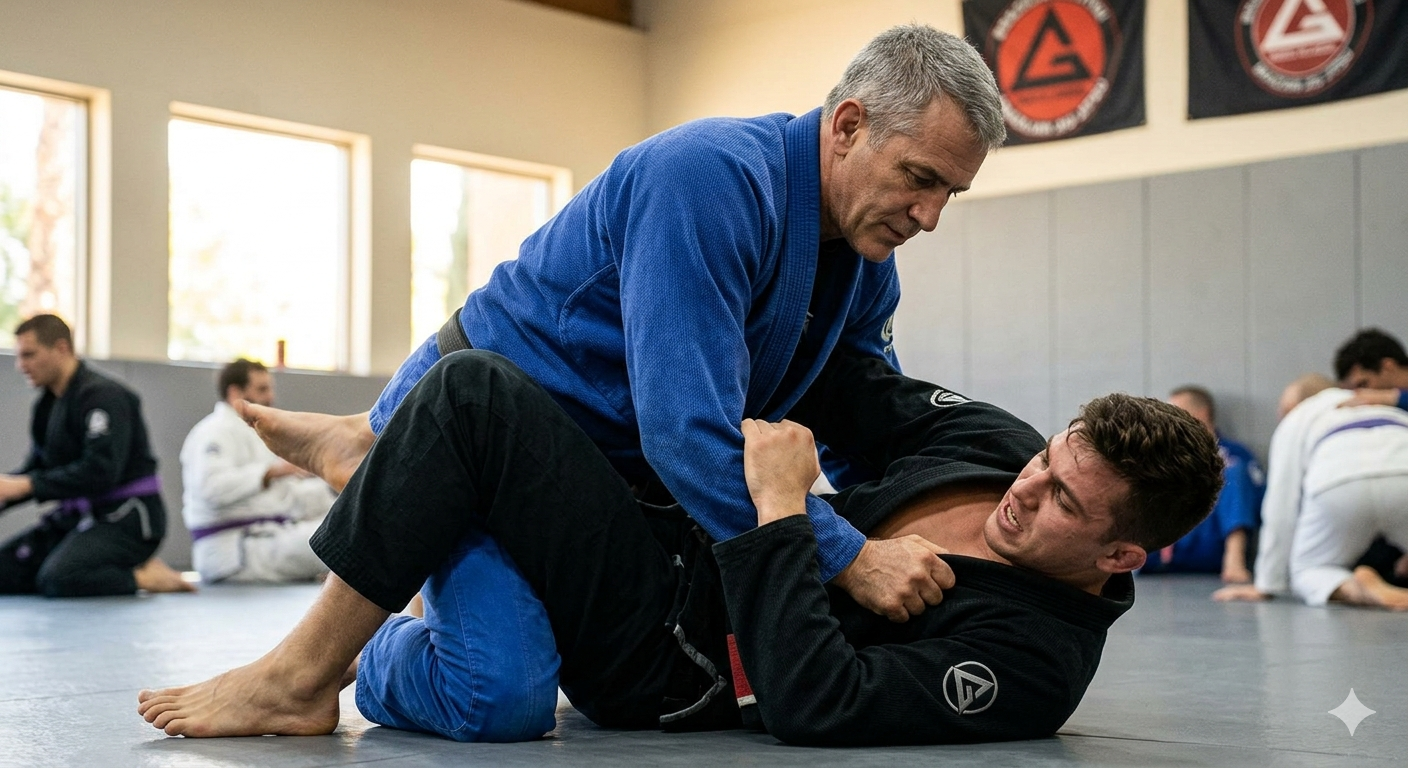
The first lesson any beginner learns on the mats is that panic is the enemy of progress. When you are trapped underneath a heavier opponent, your natural instinct is to thrash, hold your breath, and use every ounce of strength to push them away. This is almost always a mistake. Expending all your energy in the first thirty seconds of a struggle leads to exhaustion, which in turn leads to poor decision making.
In Jiu Jitsu, you learn to override this primitive response. You are taught to find comfort in uncomfortable positions. By focusing on diaphragmatic breathing, you signal to your nervous system that you are not in immediate mortal danger. This physiological shift allows the prefrontal cortex, the part of the brain responsible for complex planning and problem solving, to stay online. When you can breathe, you can think; and when you can think, you can find a way out.
This translates directly into professional environments. High-stakes negotiations or sudden crises often trigger that same suffocating feeling. A practitioner of BJJ understands that the first step to solving a problem is not to act impulsively, but to stabilize their internal state. By controlling the breath and lowering the heart rate, you gain the clarity needed to assess the situation objectively rather than emotionally.
Strategic Incrementalism: Small Wins Lead to Big Escapes
One of the most profound lessons Jiu Jitsu offers is the concept of “position before submission.” You cannot solve a massive problem all at once. If you are stuck in a “mount” position, where an opponent is sitting on your chest, your goal is not to immediately finish the fight. Your goal is to move your hips just enough to create a sliver of space. Then, you use that space to reclaim a limb. Then, you transition to a neutral position.
This is strategic incrementalism. In business and in life, we often become overwhelmed by the sheer scale of a challenge. We look for a “silver bullet” solution that will fix everything in one move. Jiu Jitsu teaches you that such solutions are rare and risky. Instead, the art focuses on the “micro-battle.” If you can improve your position by just ten percent, you have changed the trajectory of the encounter.
Professional development experts often note that the ability to break down complex tasks into manageable steps is a hallmark of high achievers. As noted in several leadership analyses on Forbes, the most resilient leaders are those who can maintain a long-term vision while focusing intensely on the immediate, actionable next step. Jiu Jitsu is a physical manifestation of this philosophy. Every time you step onto the mat, you are practicing the art of breaking down overwhelming pressure into solvable segments.
The Value of Immediate Feedback and the Ego’s Death
In most areas of life, the feedback loop is delayed. If you make a mistake at work, you might not feel the consequences for weeks or months. In Jiu Jitsu, the feedback is instantaneous. If you leave your arm exposed, you get caught in an armbar. If you cross your ankles incorrectly, you get foot-locked. This immediate consequence removes the ability to make excuses. You cannot blame the “market” or a “coworker” for a tactical error on the mats.
This creates a culture of extreme accountability. It also demands the death of the ego. To get better at Jiu Jitsu, you must be willing to “tap out” or concede hundreds of times. Every tap is a lesson. It is an acknowledgment that your current solution was insufficient and that you need to adjust your strategy. This fosters a growth mindset that is invaluable in the modern world. Instead of seeing failure as a reflection of your worth, you begin to see it as data.
The pursuit of mastery in this sport requires finding the right environment. Many people start their journey by searching for the best jiu jitsu gym near me to ensure they have access to high-quality instruction and a supportive community. A good academy acts as a crucible where you can fail safely, learn rapidly, and build the mental toughness required to handle the pressures of the outside world.
Adaptation and the Evolving Landscape of Combat Sports
The world of grappling is not static. It is constantly evolving through new research, sports science, and competitive trends. According to recent reports on Google News, the popularity of Brazilian Jiu Jitsu continues to surge globally, influenced by its effectiveness in mixed martial arts and its growing reputation as a primary tool for mental health and stress management. As more people realize that physical struggle can lead to mental clarity, the sport is being integrated into corporate wellness programs and veteran outreach initiatives.
The ability to adapt is perhaps the final lesson of the art. No two opponents are the same, and no two problems have the exact same solution. A technique that works on a tall, lanky opponent might fail against someone short and explosive. This teaches a level of cognitive flexibility that is essential in a rapidly changing economy. You learn not to fall in love with a single plan, but to remain fluid and adaptable as the “pressure” changes shape.
Conclusion
Jiu Jitsu is far more than a collection of grappling techniques; it is a philosophy of resilience. It teaches you to breathe when you want to scream, to think when you want to panic, and to move forward when you feel pinned down. By exposing yourself to controlled bouts of physical pressure, you build a “stress ceiling” that allows you to remain calm in every other area of your life. You learn that problems are simply puzzles waiting to be solved, provided you have the patience and the presence of mind to look for the opening.
If you are looking to sharpen your mind while strengthening your body, there is no substitute for live rolling. Start your journey today by visiting a local academy. Look for a community that values technical proficiency and mutual respect. Finding the right place to train is the first step toward a more disciplined, focused, and resilient version of yourself. Take the leap, step onto the mats, and discover what you are truly capable of when the pressure is on.